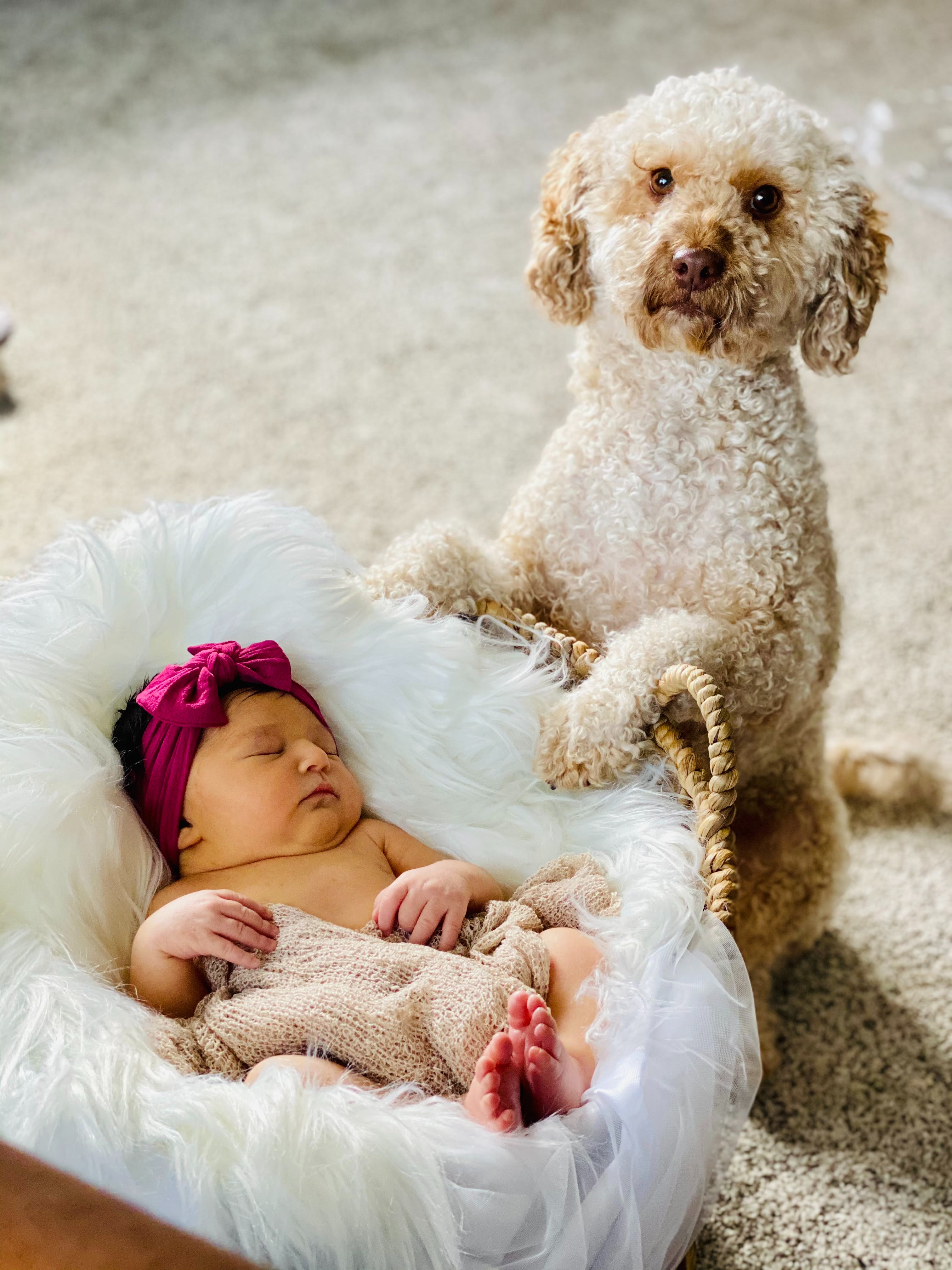

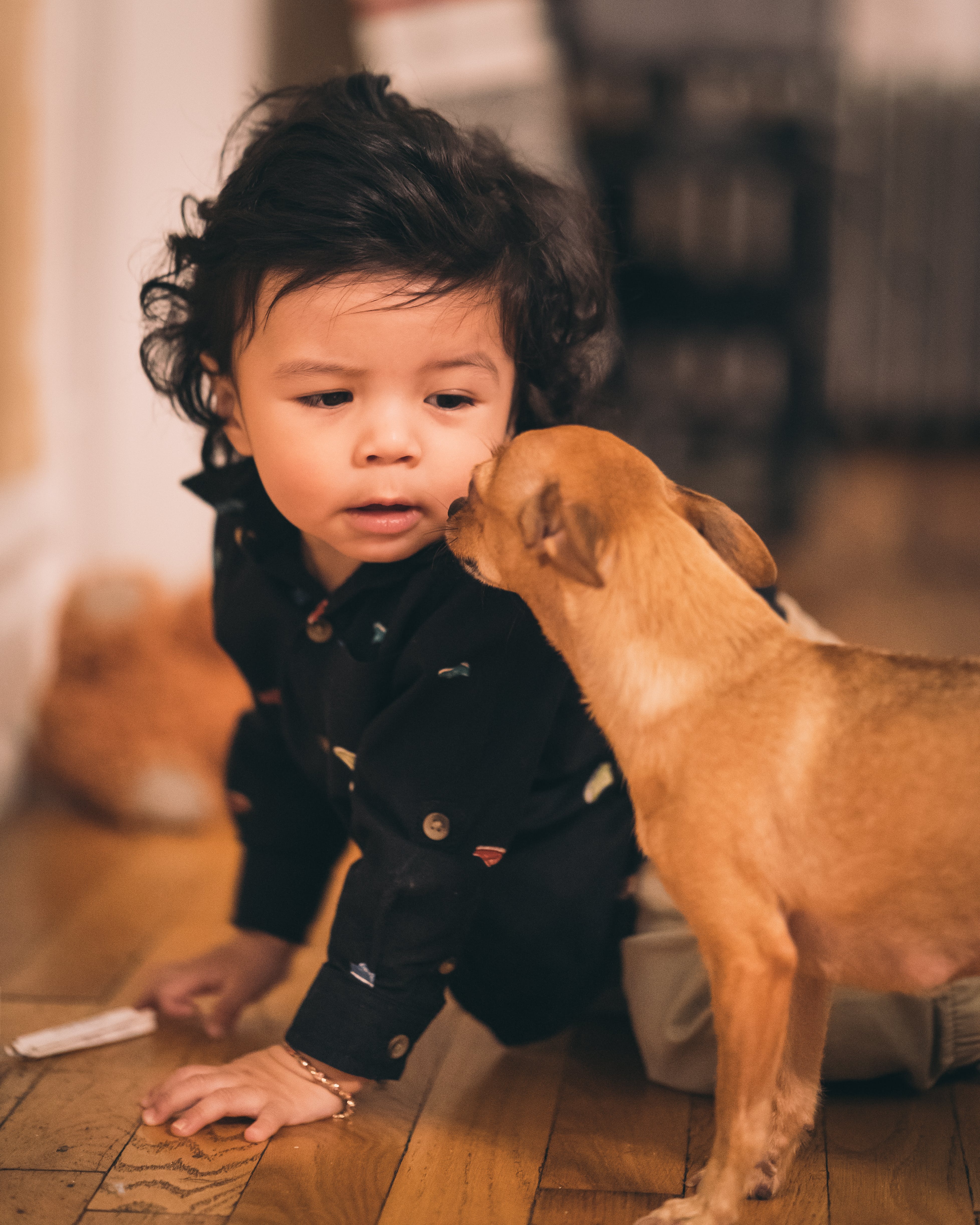
Welcoming a new baby into your home is a joyous occasion, but it also comes with its fair share of adjustments. One significant change that many families face is introducing their beloved fur baby to the newest human addition. The key to a successful transition lies in careful planning, patience, and positive reinforcement. In this blog post, we’ll explore some tips and tricks to ensure a smooth introduction between your dog and your new bundle of joy.
Preparation is Key:
Before the baby arrives, take some time to prepare your dog for the upcoming changes. Gradually adjust their routine to mimic the baby’s schedule, including feeding times, walks, and playtime. This will help your dog adapt to the new rhythm of the household.
Basic Obedience Training:
Ensure that your dog has a solid foundation of basic obedience commands like sit, stay, and leave it. This will be crucial when managing your dog’s behavior around the baby. Consider enrolling in a refresher training course to reinforce good manners.
Create a Safe Space:
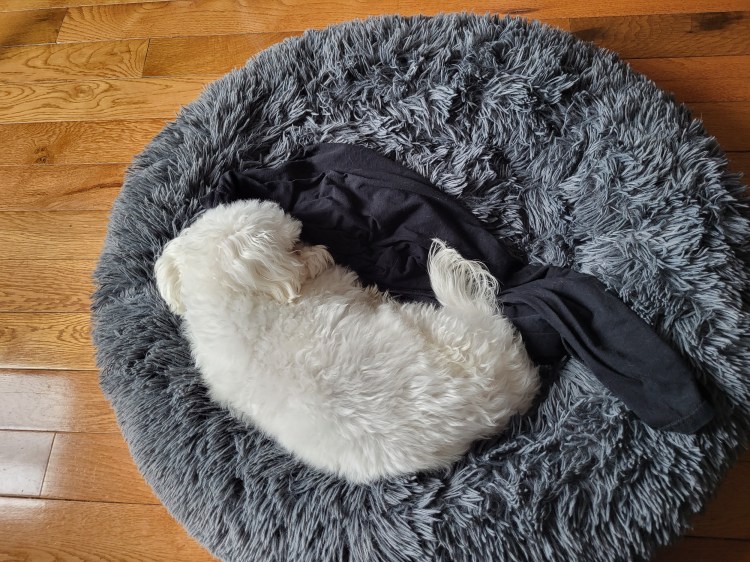
Set up a designated safe space for your dog where they can retreat when they need a break. This could be a cozy corner with their bed, toys, and water bowl. Teach your dog that this space is a positive and calm area, reinforcing the idea that the baby’s presence is not a threat.
As an Amazon associate, I earn from qualifying purchases.
Familiarize with Baby Smells:
Before bringing the baby home, introduce your dog to the scent of baby products, such as lotions and powders. This helps your dog become familiar with the new smells associated with the baby.
Gradual Introductions:
When you first bring the baby home, allow your dog to sniff a blanket or clothing item with the baby’s scent before the face-to-face introduction. Keep initial meetings short and positive, rewarding your dog for calm behavior.
Supervised Interaction:
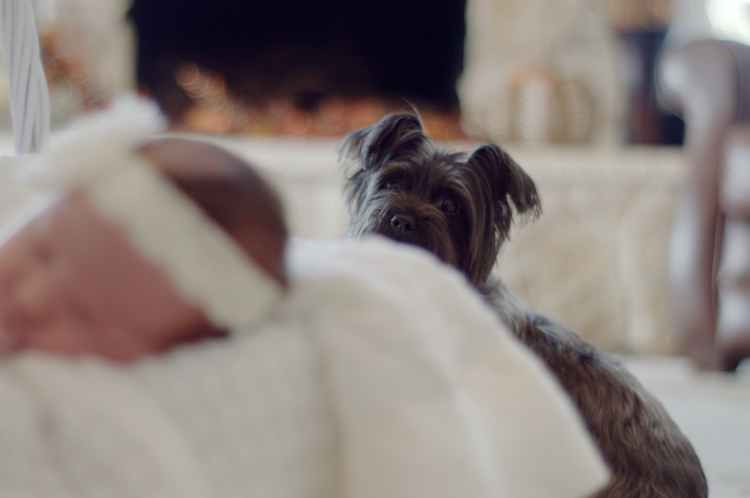
Always supervise interactions between your dog and the baby. Allow your dog to approach the baby at their own pace and use positive reinforcement when they exhibit gentle behavior. Be patient, as it may take time for your dog to adjust.
Positive Reinforcement:
Reward your dog for positive behavior around the baby. This could include treats, praise, or extra attention. Positive reinforcement helps your dog associate the baby with positive experiences.
Maintain Routine and Attention:
Despite the new demands of caring for a baby, try to maintain your dog’s routine as much as possible. This includes regular walks, playtime, and attention. A well-exercised and mentally stimulated dog is more likely to be calm and accepting of changes.
Stay Calm and Positive:
Dogs are sensitive to their owners’ emotions, so try to stay calm and positive during the transition. If you’re anxious, your dog may pick up on those feelings, potentially leading to stress or confusion.
Professional Guidance:
If you’re uncertain about how your dog will react to the new baby, consider seeking the advice of a professional dog trainer or behaviorist. They can provide personalized guidance based on your dog’s specific temperament and behavior.
Introducing your dog to a new baby requires patience, preparation, and a commitment to positive reinforcement. By taking the time to prepare your dog, creating a safe environment, and supervising interactions, you can foster a harmonious relationship between your furry friend and your newest family member. Remember, with time and care, your dog and baby can become the best of friends, creating lasting bonds within your growing family.
 Cindy Ella Speaks